How Do You Choose an Industrial Hose for Steam Applications?
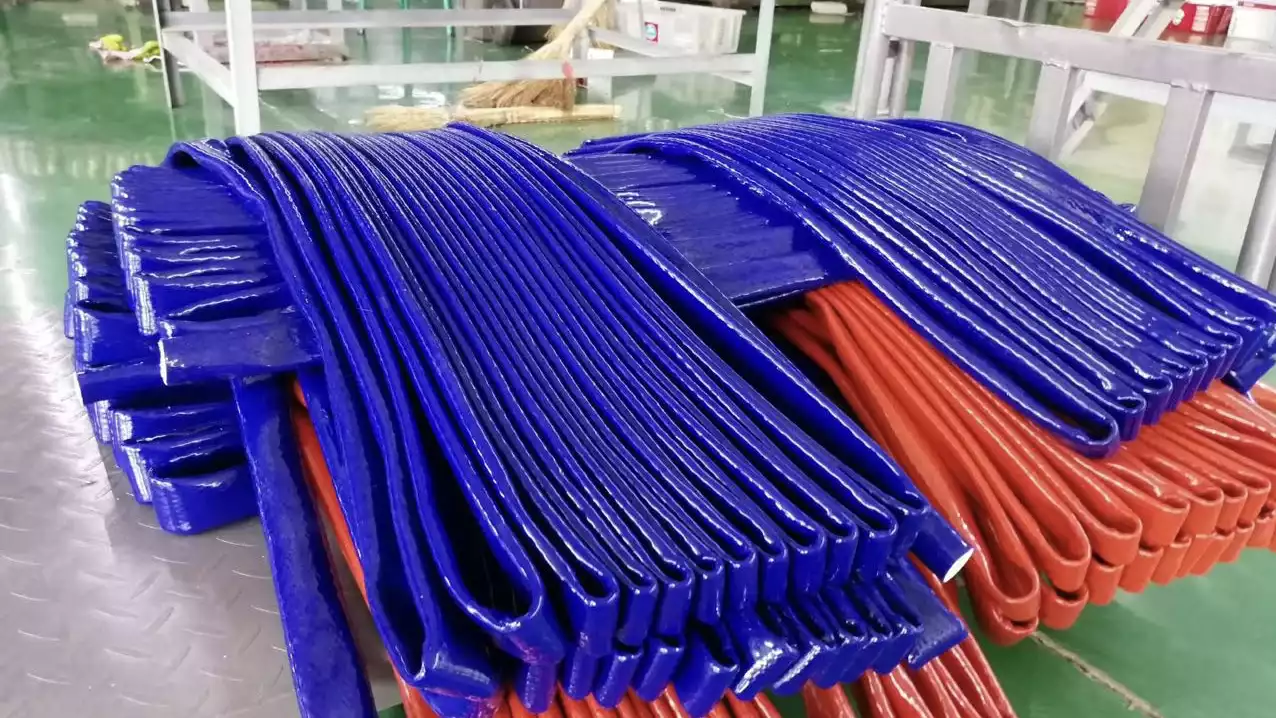
Choose a steam hose by matching the complete hose assembly to the highest temperature, pressure, steam condition, bend requirement, and coupling rating expected in service. Saturated steam reaches about 170°C at 7 bar absolute and roughly 184°C at 10 bar absolute, so pressure and temperature cannot be checked separately. Steam-rated EPDM tubes, textile or steel reinforcement, approved couplings, and controlled bend radius are common requirements. Under EN ISO 6134:2017, steam hoses are classified for defined temperature and pressure ranges. Never use burst pressure as working pressure. Confirm the manufacturer’s pressure-temperature chart, assembly rating, condensate exposure, and inspection limits before installation.
Steam service is harder on a hose than hot-water service because temperature, internal pressure, condensate, and decompression occur in the same line. At atmospheric pressure, saturated steam is near 100°C; at about 6 bar gauge, saturation temperature is already around 165°C, and at 10 bar gauge it approaches 184°C. A hose sold simply as “heat resistant” may therefore be unsuitable even when its published temperature limit appears high.
That temperature increase also changes how elastomers age. EPDM is widely used for steam tubes because it has good resistance to hot water, steam, ozone, and weathering, but the usable limit depends on the compound formulation and hose construction rather than the letters “EPDM” alone. A product approved for 164°C intermittent steam should not be substituted for one specified for continuous 210°C service.
The useful specification is not “EPDM, 10 bar.” It is closer to “saturated steam, maximum 184°C, maximum operating pressure, defined duty cycle, approved coupling system, and stated bend radius.”
Pressure has to be read from a steam-specific chart. A hose rated at 20 bar for another medium may have a substantially lower allowable pressure at 180°C. EN ISO 6134:2017 covers rubber hoses and hose assemblies for saturated steam and provides classifications tied to service conditions; buyers should still use the individual manufacturer’s data because construction, reinforcement, and permitted temperatures differ between products.
Burst pressure is also easy to misuse. Industrial hose specifications often show a working-pressure-to-burst-pressure relationship such as 1:4, but the higher figure exists as a test margin, not an operating allowance. A 10 bar working-pressure hose with a 40 bar minimum burst figure is still a 10 bar service hose. Repeated use above its rated pressure can damage reinforcement before any visible exterior defect develops.
The tube is only one part of the assembly. Reinforcement carries much of the pressure force, while the cover protects that reinforcement from abrasion, ozone, weather, oils, and mechanical contact. Textile reinforcement can provide flexibility in moderate service; steel-wire reinforcement is common where higher pressure capability or dimensional stability is required. The correct choice comes from the rated assembly rather than a preference for one reinforcement material.
| Item to verify | Practical specification check | Why it matters |
|---|---|---|
| Steam type | Saturated, wet, or superheated | Superheated steam may exceed the saturation temperature at the same pressure |
| Maximum temperature | Use actual peak, not normal average | A line averaging 150°C may still reach 180°C during operation |
| Working pressure | Check at stated steam temperature | General hose pressure ratings may not apply to steam |
| Burst rating | Treat only as test/safety margin | A 4:1 ratio does not permit operation at 400% of working pressure |
| Bend radius | Use manufacturer minimum | Tight bending stresses reinforcement and coupling zones |
| Couplings | Use steam-approved parts | The assembly is limited by its lowest-rated component |
Superheated steam deserves separate attention. Saturated steam at a given pressure has a defined saturation temperature, while superheated steam is hotter than that value. A hose suitable for saturated steam at 10 bar may therefore not be suitable for superheated steam at the same pressure. Manufacturer approval should explicitly state superheated-steam compatibility rather than leaving the user to infer it from a maximum temperature figure.
Condensate adds another source of damage. When steam cools inside a hose, liquid water can remain after shutdown. On restart, steam can move the condensate rapidly through bends and fittings, producing impact, vibration, and uneven heating. Good system practice includes controlled warm-up and proper drainage rather than repeatedly exposing a cold hose to full steam pressure within seconds.
Repeated heating and cooling also affects adhesion between the tube, reinforcement, and cover. Over hundreds or thousands of cycles, rubber compounds can harden, soften, crack, or separate. A hose used for a 15-minute cleaning cycle twice per day sees a very different thermal history from a hose carrying steam continuously for an 8-hour shift, even when both operate at the same nominal temperature.
Rapid decompression can contribute to internal blistering sometimes called popcorning. Moisture or steam that has penetrated the tube can expand when internal pressure falls quickly, damaging the rubber below the visible surface. An exterior inspection may therefore look acceptable while the inner tube has developed cavities or separation, which is why controlled depressurization and scheduled internal assessment matter in severe service.
Diameter selection should be based on required mass flow and acceptable pressure loss rather than connector size alone. A smaller inside diameter raises steam velocity for the same flow rate; doubling flow through the same cross-sectional area approximately doubles velocity. Higher velocity can increase friction loss, noise, movement, and erosion where droplets or condensate are present, especially through elbows and restricted fittings.
Hose length affects the same pressure-loss calculation. A 20 m hose will normally lose more pressure than a 5 m hose of the same bore at the same flow rate. Excess length also increases floor contact and abrasion, while insufficient length can pull directly on the coupling. The installed hose needs enough free length to move through heating, cooling, pressure changes, and equipment motion without being stretched.
Bend radius should be treated as a measurable installation limit. If a manufacturer specifies a 250 mm minimum bend radius, routing the hose around a 100 mm radius corner is outside the stated geometry even when the hose appears flexible enough by hand. Repeated over-bending can distort reinforcement, flatten the bore, and concentrate stress near the ferrule or clamp area.
Couplings deserve the same attention as the hose body. Steam can produce serious burns from a small leak, and the fitting area experiences high local stress from bending and handling. Coupling material, shank dimensions, attachment method, gasket temperature rating, and hose outside diameter all need to match the hose maker’s recommendations. A 2023 replacement fitting with the same nominal thread size is not automatically equivalent to the original assembly.
The maximum rating of an assembled steam hose is the lowest rating among the hose, coupling, gasket, attachment method, and any adapter installed in the pressure path.
For movable hose lines, external protection can also be appropriate where the assembly passes close to hot machinery, sharp edges, weld spatter, or abrasive structures. A hydraulic hose fire sleeve may be used in suitable installations as an external heat and flame-protection layer, but it does not raise the steam hose’s internal pressure or temperature rating. The hose underneath still has to be approved for the actual steam service.
Inspection frequency should reflect service severity rather than a fixed calendar interval copied from another plant. A hose used 20 times per day, dragged over concrete, and repeatedly heated above 170°C deserves more frequent examination than a protected stationary assembly used once per week. Facilities commonly combine pre-use visual checks with documented periodic inspections based on manufacturer guidance and internal maintenance procedures.
Inspection should cover the full length, not only the fittings. Look for cover cracking, blistering, cuts, soft spots, hardening, exposed reinforcement, flattening, kinks, coupling movement, corrosion, leakage, or changes in hose shape. A visible reinforcement wire or a blister near a coupling is not a cosmetic issue; the assembly should be removed from service and evaluated under the site’s maintenance procedure.
Replacement decisions should also consider age and service history. A hose installed in 2021 but used only occasionally may have a different condition from a hose installed in 2025 and subjected to daily steam-cleaning cycles. Date codes, inspection records, pressure-test records where applicable, and known operating temperatures provide a better basis than exterior appearance alone.
Before ordering, record the actual application in one line: medium, maximum temperature, maximum operating pressure, hose bore, length, movement, environment, coupling type, and applicable standard. For example: “saturated steam, 184°C maximum, 10 bar absolute, 25 mm ID, 12 m length, manually handled, indoor washdown area, steam-rated couplings, EN ISO 6134:2017-compatible specification.” A supplier can evaluate that request far more reliably than “send a high-temperature steam hose.”
A final purchase check should compare at least three published numbers: maximum steam temperature, allowable working pressure at that temperature, and minimum bend radius. Add the coupling rating and hose dimensions before approving the assembly. If one value is missing from the datasheet, request written manufacturer confirmation rather than estimating from another hose series or applying a general-purpose pressure rating.