A Procurement Guide to AGV and AMR Direct Drive Motors
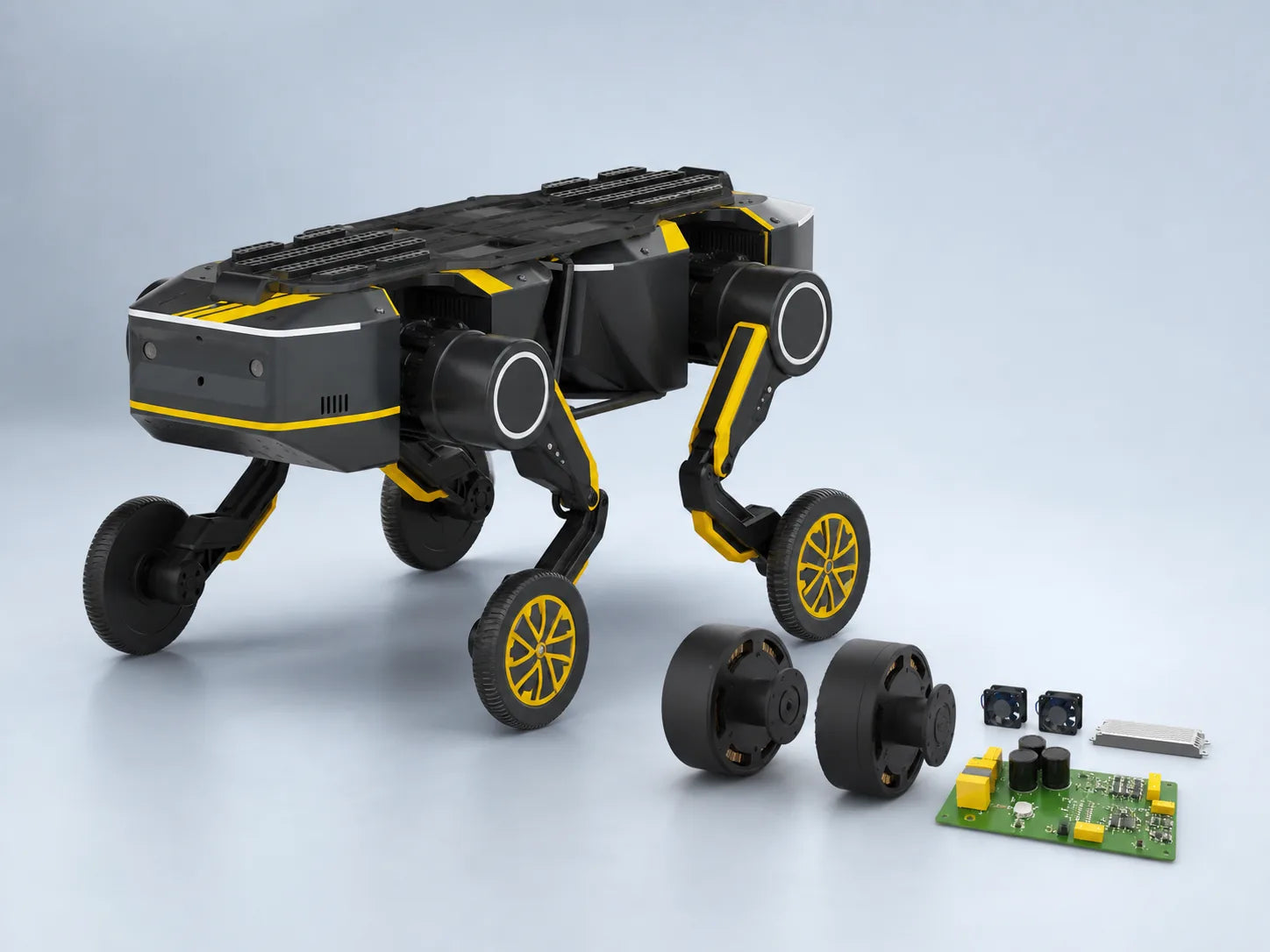
AGV and AMR direct drive motors determine robot movement accuracy, payload handling, energy use, and maintenance requirements. A suitable motor selection should consider torque, speed, encoder resolution, protection rating, communication method, and operating cycles. Modern direct drive systems can reach 90%–95% efficiency, support payloads from 50 kg to more than 5 tons, and operate continuously for over 20,000 hours when properly designed.
AGV and AMR platforms are widely used in warehouses, manufacturing facilities, healthcare logistics, and industrial transportation. Since 2020, demand for autonomous mobile robots has increased as companies seek flexible automation solutions without fixed conveyor systems. The motor assembly directly affects travel stability, positioning accuracy, and battery consumption.
Direct drive motors remove traditional gearboxes between the motor and wheel. This structure reduces mechanical parts, lowers friction losses, and improves response speed during acceleration and braking. Compared with geared systems, direct drive solutions can reduce mechanical maintenance requirements by approximately 30%–50% because there are fewer wearing components.
A direct drive motor connects power output more directly to the wheel, allowing AGV and AMR manufacturers to achieve smoother movement with fewer mechanical adjustments.
Motor procurement starts with matching torque output to the robot’s operating conditions. Engineers need to calculate required torque based on payload weight, wheel diameter, acceleration rate, floor conditions, and travel slope.
For example, a 300 kg warehouse AMR may require around 20–60 Nm continuous torque, while a 3-ton industrial transport robot may require several hundred Nm depending on wheel configuration. A motor selected only by rated power may not perform well during frequent starts, stops, and load changes.
| Application | Typical Payload | Motor Selection Focus |
|---|---|---|
| Warehouse AMR | 50–500 kg | Efficiency, compact size, accurate control |
| Factory AGV | 500 kg–3 tons | High torque, long operation time |
| Heavy Transport Robot | 3–10 tons | High load capacity, thermal management |
| Service Robot | 20–200 kg | Low noise, smooth movement |
Torque density is often used when comparing direct drive motors. A higher torque-to-weight ratio allows robot manufacturers to reduce chassis size while maintaining transportation capability. Many industrial permanent magnet motors achieve torque densities between 5 and 15 Nm/kg, depending on design and cooling structure.
The operating speed range should also match the robot’s application. Warehouse AMRs normally travel between 0.5 and 2 m/s, while industrial AGVs may operate at different speeds depending on safety requirements. Motors designed for mobile robots usually prioritize smooth low-speed control rather than maximum rotation speed.
Motor feedback accuracy depends heavily on encoder selection. Incremental encoders provide basic speed and position information, but absolute encoders are preferred for many AMR applications because they maintain position information after power interruption.
High-resolution encoders with 17–23 bit resolution are commonly used in precision mobile robots. A higher encoder resolution helps the controller adjust wheel speed differences and improves navigation accuracy during turning, docking, and narrow-space movement.
The communication interface is another important specification. Modern mobile robots require stable communication between the motor controller and the robot control system.
Common industrial communication options include:
| Communication Type | Typical Application |
|---|---|
| CANopen | Standard AGV and AMR control systems |
| EtherCAT | High-speed coordinated motion |
| RS485 | Cost-sensitive industrial equipment |
| Industrial Ethernet | Large automation systems |
For applications requiring a reliable CAN Bus motor for AMR robot chassis, engineers usually evaluate communication stability, controller compatibility, feedback response time, and available diagnostic functions. CAN-based systems are widely used because they provide reliable data transmission in industrial environments.
Thermal performance affects how long a motor can maintain its rated output. AMRs often operate many hours per day, and insufficient cooling can reduce motor efficiency and shorten component lifetime.
Motor suppliers should provide continuous torque curves, temperature rise data, and overload information. A motor capable of producing 150 Nm peak torque may only maintain that output for a short period if thermal limits are reached.
Typical industrial requirements include:
-
Operating temperature range: -20°C to +50°C
-
Protection level: IP65 or IP67
-
Continuous operation capability: 8–24 hours per day
-
Overload capacity: 150%–300% of rated torque for short periods
Protection rating becomes important when robots operate in factories, warehouses, or outdoor environments. Dust, moisture, and cleaning processes can affect motor reliability.
An IP65-rated motor protects against dust and low-pressure water jets, while IP67 protection allows temporary immersion resistance under defined conditions. Selecting the correct protection level can extend service intervals and reduce unexpected maintenance.
Motor size and installation method also influence chassis design. Direct drive motors are often integrated into wheel modules, reducing the space required for mechanical transmission systems.
Many AMR manufacturers now use integrated wheel drive units that combine:
-
Motor
-
Encoder
-
Brake system
-
Controller interface
-
Mechanical mounting structure
This integration can reduce assembly time by approximately 20%–40% compared with separate motor and gearbox installation methods.
Supplier evaluation should include technical documents, production consistency, testing procedures, and customization ability. A motor supplier should provide performance curves instead of only basic specifications.
Important supplier documents include:
| Document | Purpose |
|---|---|
| Torque-speed curve | Confirms operating range |
| Thermal test report | Evaluates continuous performance |
| Noise measurement | Checks operation quality |
| Vibration data | Supports reliability assessment |
| Protection test results | Confirms environmental resistance |
Manufacturing consistency matters when deploying large robot fleets. A difference of only 3%–5% between motors can create uneven wheel control and require additional calibration during installation.
Lifecycle cost should also be considered during purchasing. A low-cost motor may require more frequent replacement if it cannot handle continuous industrial operation. Direct drive motors usually have higher initial prices than simple geared motors, but fewer mechanical parts can reduce long-term maintenance costs.
Over a service period of 5–10 years, maintenance requirements, energy consumption, downtime frequency, and spare part availability often influence total ownership cost more than the initial purchase price.
For manufacturers comparing available solutions, the M15 series direct drive motor platform provides an example of compact motor design for mobile robot applications. More technical specifications can be reviewed through this direct drive motor resource: M15 series direct drive motor.
Battery efficiency is another factor related to motor selection. Since AGVs and AMRs depend on onboard batteries, motor efficiency affects operating time between charging cycles. A motor system operating at 90% efficiency instead of 80% efficiency can significantly reduce energy consumption during long daily operation.
Motor control software also influences movement quality. Advanced controllers adjust torque output according to load conditions, wheel speed differences, and navigation commands. This improves smoothness during acceleration and reduces unnecessary energy use.
Future AMR systems are expected to combine higher payload capacity, smaller chassis designs, and improved automation performance. Direct drive motors will continue to be selected based on measurable specifications such as torque density, efficiency, encoder accuracy, communication compatibility, and operating lifetime. A detailed evaluation process helps robot manufacturers choose motors that match their actual working environment and production requirements.